Sunday, October 25, 2009

Monday, December 29, 2008

Links to CBC documentary + interviews


LISTEN to part 1 of the interview with Sheryl Mackay,
CBC North by Northwest, November 13, 2005.
LISTEN to part 2 of the interview with Sheryl Mackay,
CBC North by Northwest, November 13, 2005.

LISTEN to a podcast
of the interview with Shelagh Rogers,
Sounds Like Canada [podcast date August 30, 2006, "Asian Food Fest"]

LINK to view Costa Maragos' CBC Documentary
Back to the Lotus


Spezzatina Magazine: Diasporic Dining:
Family, History, and Comfort Food

According to the philosopher Rosi Braidotti, travel and memory blur space and time. When traveling, she observes, we are always preoccupied with time (either hurrying or waiting); we exist in a kind of “in-between” moment and place; and we pass through spaces that are both ever-changing and timeless: the airport lounges, train stations, and bus terminals whose physical environments are constantly refreshed with moving bodies yet always seem to remain exactly the same.
When we experience space and time in these ways, she suggests, they leave marks upon our bodies and identities. We are always looking to be settled and secure, yet we never are. Somehow we are always uncomfortable: wedged in to chairs that do not accommodate our bodies, crammed into claustrophobic cabins, and wishing desperately to be home. Our origins fall away from us, lost in the haze of jet lag and jet fuel; we cannot distinguish our destination through the horizon’s fog. Our identities are never secure: our documents are scrutinized suspiciously; we struggle to master local customs and languages; our movements and presentation mark us as travellers; we speak in stumbling polyglot and attempt to translate our identities into something intelligible. We arrive mixed up with memory and anticipation, searching for a fixed point to get our bearings.
And most likely, with our souls and bellies craving a really good meal.
In their respective books Chow: From China to Canada: Memories of Food and Family and Comfort Food for Breakups: Memoirs of a Hungry Girl, both Janice Wong and Marusya Bociurkiw have created memoirs of migration. Food is the phrasebook they use to translate their experiences. In so doing, they have also generated portraits of Canadian immigration and identities, and tales told of families displaced across history, language, yearning and remembrance. As Bociuirkiw writes, “The pages of my cookbooks are a palimpset, layered with notes and food stains, and the complex flavours of love and loss.”
“Dot hearts” from a daughter: Janice Wong’s Chow
“From morning till night, sounds drift from the kitchen, most of them familiar and comforting... On days when warmth is the most important need of the human heart, the kitchen is the place you can find it; it dries the wet sock, it cools the hot little brain.”
—E.B. White (1899-1985)

Victoria, British Columbia, is a quiet capital city on Canada’s west coast, and the site of Canada’s first Chinatown. On August 8th, 2008 (fittingly, triple eights, which are viewed as lucky), Victoria’s Chinese-Canadians celebrated 150 years of community building, history, and achievements in Dai Fau, or “Big Port”. This celebration, along with Victoria’s sleepy nature and charming architecture, belies the painful narratives of Chinese Canadian migration. In the late 19th and early 20th century, Chinese workers were recruited to pound railroad spikes and tunnel in dusty mines. Others worked cutting timber and on ranches; in steaming laundries and restaurant kitchens. Most other professions were closed to them.
Despite Chinese Canadians’ important contribution to nation building, the nation itself did not welcome them. Immigrating Chinese had to pay a head tax; increasingly restrictive laws such as the 1923 Exclusion Act (which many Chinese Canadians subsequently referred to as Humiliation Day) forbade the immigration of most Chinese. Wives and families overseas could not join their husbands and fathers. Stranded Chinese workers were left to their own devices, to cook, live, and form their own families in linguistic and geographic isolation.
Not surprisingly, the themes of kinship and citizenship are entwined in Wong’s recollections. As she explains:
“My parents' natures were shaped by their status as the Canadian-born descendants of early Chinese immigrants. They grew up when the Chinese — even Canadian born — were unable to vote, were restricted from the full rights of citizenship. This still shocks me when I consider that one of my great-grandparents was born in northern BC in 1875, and two of my grandparents were also Canadian born. The Chinese in Canada received the right to vote when my dad was 30 years old. My mom was 25.”
In 1917, during this difficult time, Wong’s father Dennis was born in Big Port. He was quite literally raised in the kitchen. Prematurely born, baby Dennis was kept inside his mother’s warming oven and rubbed with olive oil to strengthen him, an act of homey ingenuity symbolizing the survival strategies of Chinese Canadian communities. As Wong remarks, the qualities developed through her family’s labour, “like subtlety and restraint and independence and tenacity… continue to resonate with me.”
Wong’s mother Mary was born not far away from Big Port, in Nanaimo’s Chinatown in 1922, then a “frontier town” where in 1911, 99% of the Chinese Canadian population was male. Her family grew much of their own food; as children, Wong’s mother and aunt husked corn and hauled pots of it to the mah-jong houses on warm summer evenings.
Chow, says Wong, began as a “simple tribute to my dad and his love of cooking”. It grew into a gift to her father, who died in 1999 after spending most of his life feeding others in his restaurant, and to the rest of her family. Wong’s memoir weaves intimate details of her family’s lives together with a social history of Chinese settlement and community-building across Western Canada. Food and memory are the warp and weft of Wong’s fabric. She describes, for instance, the feeling of comfort she experiences when cataloguing the contents of her parents’ cupboards: jars of preserved plums, shiitake mushrooms, bean-thread noodles; dried scallops and oysters; salted red ginger; and dried lily buds.
“In addition to memories and family stories, we had a small collection of [my father’s] recipes, handwritten notations he made whenever my siblings and I asked for a recipe. I also had a few of his letters, which always contained a reference to food, a menu from the opening day of his first restaurant” – coffee, 8 cents; entrées, $1 – “a few telegrams, my grandfather's head tax-related documents and an old shoe box full of photographs, some dating back to the mid-1800s… I also visited the archives in Nanaimo and Victoria, and compiled historical material on China, Canada, BC and Saskatchewan; research related to Chinese Canadian immigration, Chinese culinary history, general food science and cultural and food-related anecdotes.” Chow is thus part cookbook, part autobiography, part documentary, part oral history.
“Physically, I gave [my family] the gift of a book, and beyond that, I've come to understand that I gave my family a sense of the man who was a father, a husband, a son and brother, a food lover, a restaurateur, a friend and neighbour. After the book was published, customers from my dad's restaurants told us their stories, giving my family an even greater sense of who my dad was and what he meant to the community.”
As ye give, so shall ye receive. “I hadn't imagined that the original book would end up being published. The fact that it was published and that it resonated with people, across diverse cultures and backgrounds, was also an unexpected gift” back to Wong, who was “happy and surprised to know that there was so much interest in what we thought of as a simple family story.” Finally, says Wong, “I slowly came to understand that Chow was also a gift to myself. It was evident in the generosity with which friends, relatives, and acquaintances shared their stories and assisted with the many aspects involved in creating and publicizing the book. And it was evident in the faces of strangers who attended the various events associated with the book. Folks lined up to tell me their stories. I was particularly charmed to hear from a woman who told me that Chow reminded her of her Ukrainian grandmother's history. Chow gave me a greater sense of community. At times I was surrounded by people who had known me and my parents at every stage of our lives.
I also gained a deeper connection to my ‘Chineseness’. I'd grown up in Saskatchewan in the 1960s, one of two Chinese kids in my grade school — the other one was my brother. Mixing in and speaking only English were priorities for my parents. Aside from the distinctions I chose to contrive, I didn't want to be different from my Caucasian friends.” Indeed, Wong’s engagement with her family’s food is at times hesitant or rebellious. As a child, offered handmade dim sum (which, she says, loosely translates as “dot heart”, “delight heart” or “touch heart”), she refused, preferring to eat a boiled wiener.
Eventually, however, Wong reconciles her identity and experiences (and those of her family) through food. She remembers, for example, Christmas turkeys basted with soy and oyster sauces. “A hybrid identity is something I've always taken for granted. Growing up in a small prairie city, one of a handful of Chinese people, the classic Canadian multicultural ‘melting pot’ was the life I was immersed in. As kids, the fluidity with which we sampled our neighbour's cooking and their traditions, and observed or bent our own traditions to suit our tastes, seemed very natural, like second nature. It was effortless… [but] after learning my parents' histories, I'm even more impressed by their ability to mix and meld. Their lives had to span far greater shifts than mine.”

-Krista Scott-Dixon

Sequential Tart says: A scrumptious and warm book


I love food memoirs, and finding one about my local food culture delights me. The Chinese food scene in Canada is plentiful and vibrant, and although many people would assume that this is due to more recent influxes of immigrants, Janice Wong's book recounts her parents' early lives in Canada and the Chinese history that is often overlooked by Canadian scholars.

The book is filled with easy-to-follow recipes with suggestions for substitutions (probably not necessary if you live someplace with a thriving Chinatown, but handy for others) and explanations of the ingredients. But it would be a mistake to assume that the recipes are only Chinese village food; the desserts section has an extensive list of shortbread cookies, sponge cakes, and slices that will be familiar to most Westerners. Wong is very clear that the neighbourhood she grew up in was chock-a-block with immigrants of all ethnicity, and their foodways intermingled all the time.

The recipes, like fruit studded into a cake, are held together with a batter of stories and anecdotes about Wong's family, in particular her father Dennis. She writes with obvious affection about his tireless work in the diners and cafés they owned, the food they ate as children, the way everything revolved around meals and the creativity and closeness they fostered.

In places you can tell that Wong did not write the book straight through — one essay or blurb will repeat information that's already been stated — but this is easily forgivable and, even if it adds nothing to the narrative, at least does not detract. It's a scrumptious and warm book, enriching both historically and gastronomically.

-Marissa Sammy, October 20, 2008, sequentialtart.com

TO PURCHASE A COPY OF CHOW, please visit your local bookseller or order online via this LINK.

Erudit Cuizine: The Journal of Canadian Food Culture: Chow offers a glimpse into the past


My Saskatchewan mother-in-law often ate at Prince Albert’s Lotus Café in the 1960s. She remembers the restaurant as not only the place to go for a good meal at a reasonable price with lemon meringue pie ‘to die for,’ as she described it, but also for re-entry into civilization on her way home from a teaching post even further north. But to the owner, Dennis Wong, Prince Albert must have felt a far cry from his previous home in Vancouver, and farther still from the remote Guangdong province of his ancestors.

Chow: From China to Canada: Memories of Food + Family presents a broad-strokes view of one Chinese-Canadian family. It also offers an ode to author Janice Wong’s restaurateur dad, Dennis, who ran Lotus Café from the mid-1950s to 1979. Part memoir, part cookbook, Chow offers a glimpse into the past through Wong’s personal recollections and recipes.

Chow provides historical vignettes of both urban and country life, with visits to dusty gold rush Nanaimo, bustling bop-era Victoria, and pre-Mao China. One of Dennis Wong’s grandfathers was born into a well-off Christian family in China and became a Methodist minister, immigrating to Canada in 1896. His other grandfather arrived in Victoria at age 16, where he first worked as a grocer and then a chef. Later he married a woman who was born in a tepee in Barkerville during the gold rush.

Though the family encountered prejudice and travails, the stories reveal a sense of adventure, fresh chances, and relative prosperity. Through Wong’s culinary narrative, we learn how newcomers such as her family managed financially during the pre-WWII era, when the Canadian government denied Chinese nationals the vote, and barred them from teaching, medicine, law, and engineering. Chow is more than a cookbook—the foods of Wong’s family are a steady backdrop to their tumultuous history.

Dennis, a second-generation Canadian, was born in Victoria, BC, in 1917 with the odds staked against him. As a not quite two-pound preemie he was kept in the warming oven of his mother’s wood stove. Wong describes how her father nevertheless thrived, becoming an athlete and dandy in his teens. He even earned the title of runner-up yoyo king in Victoria of the late 1920s.

Dennis’s childhood home stood six blocks outside Canada’s oldest Chinatown in Victoria, even though most Chinese families chose to settle within the Chinese hub. Family meals reflected his bicultural life. While home-cooked dinners consisted of Chinese fare, when outdoors, the family feasted on potato salad and chicken pies for Sunday church picnics.

He met his wife at a Chinatown Leap Year Dance on New Year’s Eve, 1940. Mary Mar grew up in Nanaimo, where Chinese immigrants began to arrive in the 1860s to work the coalmines. As a young teen she accompanied her grandmother home to Guangdong. The village was bereft of young men who had left to seek their fortune, so a bride would marry a symbolic rooster in order to join their groom’s families in this patrilocal culture. Mary later worked as a seamstress in Victoria and then opened a dressmaker’s shop in Vancouver with her sister.

The Wongs grabbed the opportunity to buy Wings Café in boomtown Prince Albert of the 1940s. In 1956 Dennis opened his Chinese-Canadian restaurant Lotus Café. While he served dishes such as chow mein, egg fu yong, and some other Chinese restaurant classics, he saved his memorable village-style cooking for home meals on weekends. Instead the café mainly offered prime ribs or western roast chickens. Yet in true syncretic fashion, Dennis’s killer gravy included oyster sauce.

As a child, Wong felt her family’s food fit in with her ethnically diverse neighbourhood stocked with cabbage rolls and kugel, or jellied salads and meatloaf. At the same time, she recalls her mother—one of two Chinese women in Prince Albert in the 1940s—often expressing feelings of self-consciousness. It seemed whenever the particularly pungent salted fish, hum yee, was on the table, neighbours or girl guides or salesmen would knock on the door.

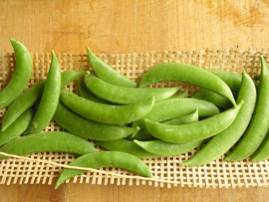
Approachable recipes are served alongside these stories, from easy stir-fries and spare ribs, to dim sum dumplings and sweet bean buns. Wong includes handy tips, such as how to improvise a steam rack in a wok, or how adding a pinch of baking soda to green beans captures their colour. She also explains the ins and outs of different starches for thickeners (her dad favoured tapioca). Yet interestingly the dessert chapter features only classic Prairie fare: butter tarts and lemon bread, for example, all Dennis’s favourites (but not, alas, my mother-in-law’s fondly remembered pie).

Although Chow reads well, it leaves some questions unanswered, particularly concerning the general historical context, which would have helped clarify aspects of Wong’s tale. Chinese-Canadian restaurants dot the prairies like grain elevators, thanks in part to immigrant railway workers who were out of a job once the transcontinental iron rail was completed. Wong’s book begs further exploration of this rich chapter in Canadian history.

Chow is a sliver of a tale in the larger story of the globalization of Chinese food, and how migration continues to shape restaurants worldwide. Indeed, other Asian communities have more recently made their gustatory mark in Canada too, from the renowned Thai restaurant Nit’s in Moose Jaw or tiny Vietnamese soup counters tucked into small-town strip malls to mid-sized fiery Korean grills in urban centres. Much of their stories remain to be told. Through her book, Wong offers a peek into her community and its history through Dennis’s kitchen.

-Maeve Haldane, Cuizine, Volume 1, 2008: erudit.org

TO PURCHASE A COPY OF CHOW, please visit your local bookseller
or order online via this LINK.

Wednesday, November 07, 2007

Chow + Cuisine Canada's 10th Anniversary Celebrations


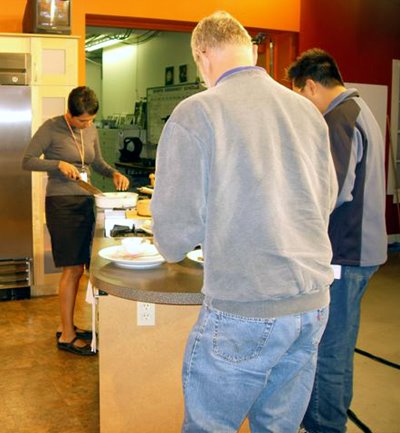
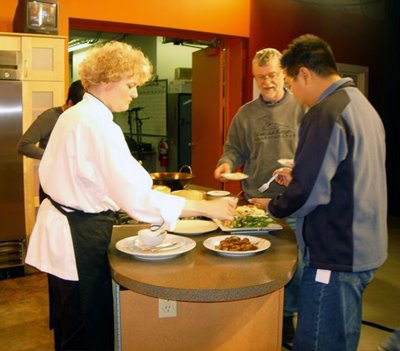
Cuisine Canada and the University of Guelph honour winning titles at their 10th Anniversary Celebration for the Canadian Culinary Book Awards, Toronto, November 2007. CHOW received the Gold award in 2006 in the category of Canadian Food Culture.

TO PURCHASE A COPY OF CHOW, please visit your local bookseller
or order online via this LINK.

FIND COPIES OF CHOW at a library near you.

Friday, July 27, 2007

Lotusland Documentary
Receives Honourable Mention


Costa Maragos' CBC documentary on Chow and the Wong family
in Saskatchewan
receives an honourable mention at the 54th Columbus International Film and Video Festival, also known as the Chris Awards. The Chris Awards is one of the oldest and most prestigious documentary, entertainment, and informational competitions in North America.
LINK to view Costa Maragos' CBC Documentary Back to the Lotus

Friday, March 16, 2007

Another CBC Documentary


CBC NEWSWORLD aired Halya Kuchmij's documentary The Chan Legacy for the Generations Series during the month of July 2007.
The Chan Legacy documents the story of Dennis Wong's grandfather, Reverand Chan Yu Tan, and his descendents. The film portrays the shared history of many early Chinese-Canadian Pioneers. The story begins in 1896 and continues to present day. Included in the documentary is a segment on Dennis Wong and Chow: From China to Canada: Memories of Food and Family.

Families re-trace their roots through the Generations Series, a six-part series airing in July on CBC NEWSWORLD.
Generations: The Chan Legacy, produced by Halya Kuchmij, narrated by Michele Cheung.

Friday, February 09, 2007

Monday Magazine: Stopping for Chow
food as the meeting place between cultures

Memories and meals with Janice Wong
"Towards the end of his life," Vancouver artist Janice Wong tells me, "my father suffered a number of strokes and lost his speech. It was very difficult for him to communicate." When he died in 1999, she tried to capture something of what her father had gone through. "I spread and layered the text of things he'd said across a canvas so that the words, while still there, were illegible—like a wave or a movement." While creating this work she looked over the letters he'd sent her over the years and realized that in every one he had a small line about food. Dennis Wong, Victoria born, had been a restaurateur—the owner of The Lotus, one of the first Chinese restaurants in Prince Albert, Saskatchewan. "In all his letters he'd tell me how to prepare something he'd sent me, or say, 'Tonight for dinner mom and I had...'"
It's a blue and shimmering spring-in-winter Victoria afternoon and we're walking across the Johnson Street bridge. Wong is in town to speak at a fundraising event and Chinese New Year dinner held by the Victoria Chinatown Lioness Club. In 2005 she published CHOW, a cookbook-cum-memoir about her parents' early lives in both China and Canada, and the evolution of the family business. It's also about the experiences and formation of the early 20th century Chinese community in Canada, the heartbreaking loneliness of the Gold Mountain Sojourners—men who left their families in China to make their fortune in North America, the wooden Chinatown of Nanaimo and, maybe most of all, about food as the meeting place between cultures. Wong's project was set in motion by her father's letters. "It began as something just for my family—but other people seemed to be interested too. One thing led to another."
CHOW has been a hit, winning a Canadian Culinary Book Award and making a minor celebrity of Wong, who's done speaking engagements and television and radio interviews all across the country. Asked why she thinks her book has been so well received, she says that a lot of people appreciated the story of her family as though it was the sotry of their family. "CHOW could be the story of any immigrant family. And everybody, at some time in their life, has been in a Chinese restaurant. They're in virtually every city in the country."
Make that every city in the world. The Chinese restaurant, hallmark of a diaspora, is an institution in cities everywhere. I had one of the worst meals in my life, I tell her, at a Chinese restaurant in a hill station in India: three fried iron chicken balls literally floating in two cups of sweet and sour sauce. She laughs and says, "For so many people this is what Chinese food meant: chop suey, egg rolls, sweet and sour sauce...And, of course, you can still find that. But the culture has changed and people's tastes have broadened and restaurants are reflecting that."
Wong asks if I have any recommendations for good Chinese food in the city. I mention the delicious dim sum available on Fisgard, the JJ Wonton Noodle House on Fort with their unique sring rolls and honey-sesame chicken. But when I ask if she has any recommendations for Vancouver restaurants she admits she's been spoiled growing up with her father's cooking and the cooking of Art Gee, the chef who worked for many years at the Lotus in Prince Albert. "Art would come up with containers of village-style food. It was our type of sweet and sour—with a mixture of meats and dried vegetables and pickles." I'm intrigued by "village-style" and she tells me that Chinese pickles (which are preserved with salt, not vinegar) and dried goods form the backbone for a lot of traditional cooking, since these were the techniques for preservation before refrigeration.
Wong says the small cuts and flash frying typical of traditional Chinese cooking was a product of fuel conservation. "When my mother was in China one of her jobs was to collect dried grass for cooking, which burns very hot and fast—so they had to cook that way. Steaming relates to this as well—because they could double up by stacking steam trays over the wok to cook everything at once with the same heat."
With Chinese New Year just passed, Wong recommends a recipe for steamed fish from her book—it was one of her father's favourites and a common New Year's dish because the word for whole fish, yu, is the same as the word for "wish" and "abundance." And when preparing this dish, Wong advises, don't flip the fish. There's an old fishermen's superstition that to flip the fish portends a disastrous flipping of the boat—which would positively ruin the sauce.

-Jason Brown, Monday Magazine, Victoria
photograph: Chinatown, Victoria BC

The article includes a recipe for Jing Yu (Steamed Whole Fish)

Canadian Living Magazine: Chow Time

It was through an artist's eyes, and with an artist's deft touch, that Vancouver native Janice Wong delved into her family's rich history—which straddled the Canadian West in the 1920s, as well as the political quagmire that was China in the 1930s—to share their fascinating story in the pages of CHOW, From China to Canada: Memories of Food and Family (Whitecap, 2005, $24.95).
In this multilayered book, for which Wong was awarded the 2006 Cuisine Canada Culinary Book Award for Canadian Food Culture, the artist-author weaves together a charming—and revealing—blend of photographs, memories, artifacts, family lore, and of course, recipes.
In crafting CHOW, Wong pays homage to both her rich Chinese heritage and her colourful family in one stroke. Her father's Lotus Café in Prince Albert, Sask.—one of Dennis Wong's two restaurants—was an institution, and it's this man who inspired many of the recipes that fill the pages of CHOW.

-Canadian Living Magazine, Food, p. 163, March 2007

The article includes recipes for Chinese Barbequed Duck, Dungeness Crab with Dow See, Pineapple Chicken and Peanut Butter Cookies

Wednesday, December 13, 2006

"Chow is an utterly authentic memoir," says Books in Canada

Elegantly presented and delightful is Janice Wong’s Chow, with the subtitle of From Canada to China: Memories of Food + Family. It comes from Vancouver’s Whitecap Books, which specialises in food culture, and has become very good at it. Wong is a sharp observer both in and out of the kitchen, and a writer of real charm. Her memoir is about growing up in Prince Albert, Saskatchewan, during the 1960s, where her father Dennis ran a pair of restaurants, one Western, the other Cantonese. On the evidence of the book’s recipes, Wong senior was an excellent chef. He was also an interesting and decent human being, and Ms. Wong is a faithful daughter, sticking strictly to his written recipes and passing on the ones she merely remembers.
Her fastidiousness pays off. Chow is an utterly authentic memoir, and the recipes are excellent—including one for Dungeness crab in black bean sauce I happened to have been looking for since I first had it at Vancouver’s On On, which is where Wong hints that it came from.

-Brian Fawcett, Books in Canada

Thursday, November 30, 2006

CBC documentary on Chow and the Wong family
airs on The National


Costa Maragos' CBC documentary on Chow and the Wong family
in Saskatchewan
aired on CBC TV's The National on Friday, December 22, 2006 and on local stations in Saskatchewan on Wednesday, November 29, 2006.
LINK to view Costa Maragos' CBC Documentary Back to the Lotus

"An affectionate bridge...an important glimpse and microhistory into a time that has since disappeared," says Victoria's Monday magazine


Playing Chopsticks
Chinese food must rank as one of the world’s most popular foods. Excluding the Chinese themselves—who naturally would agree—cities like Paris have more than 1,500 Chinese restaurants. Paris?

Janice Wong knows of this love affair with Chinese cooking. Her father Dennis, born in Victoria, moved his young family to Saskatchewan, opening his first Chinese eatery in Prince Albert. Wong writes that Chow: From China to Canada: Memories of Food & Family is both a cookbook and the 80-year-old story of two Chinese-Canadian families (her father’s and her mother’s) who lived and worked in B.C. and Saskatchewan from the early 1900s on.

An old shoebox was all Wong had left of a few of her father’s treasured restaurant recipes, as he cooked from memory. Part visual record, part scrap book, part recollections, part cookbook, Chow is a handsome book suffused throughout with family photos and the arty things that come from a talented cook’s kitchen. The beauty of the book rests with Wong herself, an awarding-winning visual artist who lives in Vancouver. It is an heirloom piece to a younger generation (the nieces and nephews, Wong says) in the clan who didn’t get to know the great-grandparents and grandparents and still pester Wong for stories about “What was it like?” in the China of generations past. Chow is also an affectionate bridge between growing up eating her father’s “village” Chinese cooking and being the quintessential Canadian kid at Christmas stuffing herself on Nanaimo bars and shortbread.

Wong is only half-teasing when she says her dad probably loved food all his life because he was born early, a preemie that clocked in at less than two pounds and spent his first months “inside the warming oven of his mother’s wood stove” rubbed down in olive oil and swaddled in flannel. Wherever the love of food and cooking came from, her father’s recipes are carefully recreated here (some with handwritten notes), along with a whack of good old fashioned baking recipes for tarts, squares and cakes. East meets West in the steamy kitchen of the Wings Café and later on, the Lotus Café. The presentation for many of the recipes and stories put the food in context for when or why a dish was made or how it was created and eaten. Recipes include Dungeness crab with dow see (black bean sauce), Chinese barbecue duck (easier than you think) and three different ways to prepare green beans. There’s also an inspired Chinese gravy and even a recipe for Welsh cakes. I tried the garlicky-good recipe for the baked chicken wings, substituting chicken thighs, and made a complete finger-licking mess of myself with the baked glaze on the meat. I also tried the barbecued spareribs (no barbecue needed) and with the exception of the marinating time, the recipe is a cinch and tasty.

Wong has documented not only a loving tribute to her hard-working family (seventeen-hour days in the cafés were normal for her dad), but an important glimpse and microhistory into a time that has since disappeared—the eager new arrivals standing on the boardwalk of a western frontier town.

Whether Victoria or Paris, Prince Albert or Guangzhou, the greeting’s the same. “Nay sik fan ma?” (“Have you had your rice?”)

-Dana McNairn, Monday Magazine, Nov 29, 2006
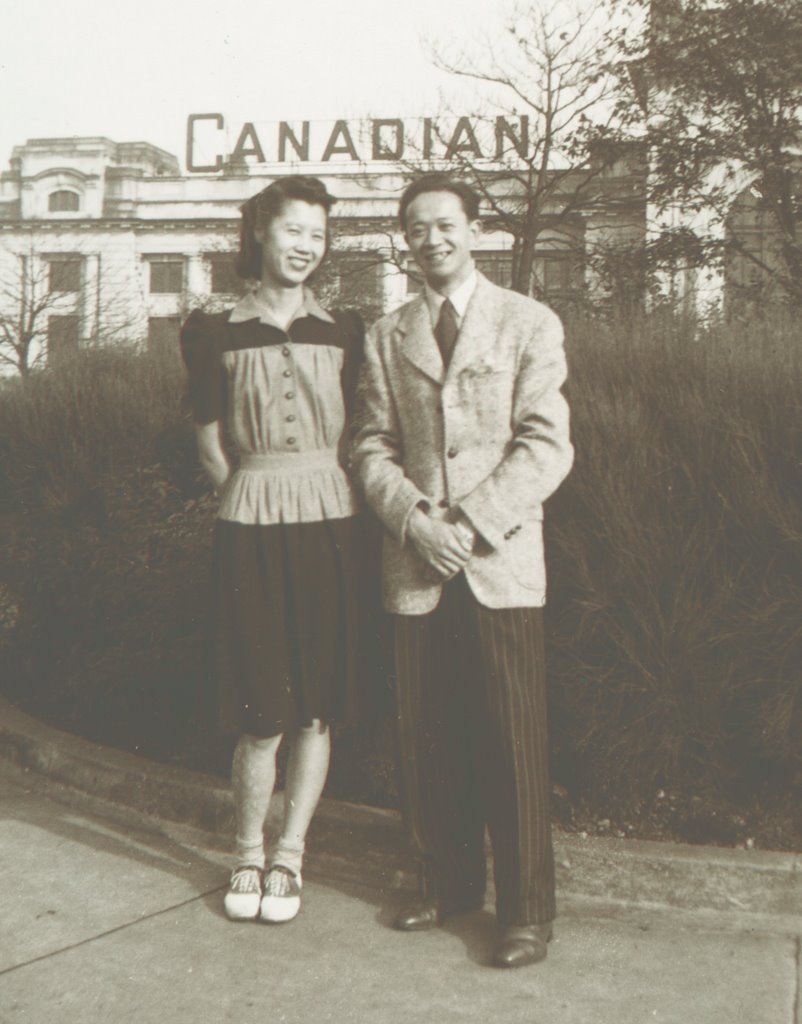
photograph: Mary Mar and Dennis Wong, Vancouver 1940s

Monday, October 16, 2006

"Beautiful, touching, award-winning book,"
says Marion Kane, Toronto Star Newspaper


Making Lemonade from Lemons
WINNIPEG
When it comes to awards, I may have fooled myself into thinking I'd bought that lofty adage about it being "an honour just to be nominated."
I know I dearly wanted to believe this when my book Dish: Memories, Recipes and Delicious Bites (Whitecap; $24.95) was short listed in the Special Interest category of the Canadian Culinary Book Awards held recently in this Prairie city during Cuisine Canada's national conference.
After all, I was up against two top-notch books and I knew it was best to keep expectations low.
They were West Coast author Pam Freir's cleverly titled collection of recipe-peppered stories called Laughing With My Mouth Full (HarperCollins; $29.95) and Tea and Pomegranates (Penguin; $26) by Nazneen Sheikh, a family memoir featuring Kashmiri cuisine and laced with mouth-watering recipes.
However, it is one thing to have low expectations and be filled with a spirit of generosity before the fact.
It is quite another to sit in a roomful of your peers at a gala dinner, having consumed several glasses of wine, only to discover that your name is notably absent from those announced by the emcee.
In keeping with a phenomenon I've noted when watching much more famous award shows on TV, I was among the non-winners that nerve-wracking night whose aching face was stretched into a forced smile. In my case, this belied feelings that included rage, despair and an urge to leave the room.
Adding salt to the wound, Sheikh's silver award was accepted by a friend who noted the author would have loved to be here but she'd recently married a prince and is living in Morocco.
Nor was it easy to hear gold winner Freir joke, to cheers and laughter, that she had no speech prepared and wouldn't have worn her brown Crocs had she thought she'd win.
Happily, however, I've had enough therapy to know that nurturing a grudge — okay, being bitter and twisted — is bad for the health, not to mention childish and unseemly so I turned lemons into lemonade.
The next morning, I met with Janice Wong, a talented artist-turned-author from Vancouver (no relation to Globe & Mail scribe Jan Wong) who was seated next to me at the awards wingding. My plan to interview a winner and rise above it all began to work.
Wong's book CHOW (Whitecap; $24.95) garnered gold in the Canadian Food Culture category. The silver runner-up was a frequent contributor to the Star's Food section, the charming Habeeb Salloum for his unusual entry: Arab Cooking on a Saskatchewan Homestead (Canadian Plains Research Centre; $29.95)
Hers is a tale of growing up in Prince Albert in north-central Saskatchewan, where her father, Dennis, was in the restaurant biz.
His second venture in this field was a Chinese Canadian eatery called Lotus on the town's main drag, which he opened in 1956 and operated for more than 20 years.
"He never succumbed to putting red dye in the sweet-and-sour sauce," recalls Wong, adding that her dad came from a family of cooks. "We grew up on his food," she says fondly of the man who died in 1999.
He left a slew of handwritten recipes that were the inspiration for her book. "I thought I'd collect all the recipes and notations, using his handwriting as an abstract element," she says, "as a gift to my family and to sum up my loss."
The result was heart-warming. "It caused a chain reaction of reunions of family and friends," she adds, including a book launch in her hometown.
Writing the book helped Wong get to know her father better. "He worked six days a week," she continues. "When we were little, we were pulled out of bed to see him at midnight."
Here is a recipe from her beautiful, touching, award-winning book.
Steamed Fish
Wong's recipe calls for a whole fish — for example, pickerel, halibut or snapper. I adapted her recipe and used a large salmon fillet about 1-1/2 lb/750g in size. You could use almost any fish, including haddock, turbot or tilapia.
1 whole fish or fillet, skin left on
Marinade
1 tbsp sesame oil
2 tbsp soy or tamari sauce
1 tbsp Chinese cooking wine or dry sherry
4 large slices fresh ginger root, peeled, slivered
Garnish
1 tbsp vegetable oil mixed with 1 tbsp sesame oil
3 green onions, chopped
Kosher salt (optional)
Method
Pat fish dry and place in baking dish — for example, a round pie plate.
In bowl, combine marinade ingredients. Pour over fish, turning to coat. Place baking dish in large skillet or wok filled with an inch or two of water; water can come up about halfway up sides. Place over high heat until water comes to boil. Reduce heat to low; simmer, covered, about 15 to 20 minutes or until fish is just cooked through.
In small saucepan, heat vegetable/sesame oil mixture until almost smoking. Pour over fish. Garnish with green onions and salt, if using.
Makes about 4 servings.

-Marion Kane, Toronto Star, October 14, 2006

Friday, October 06, 2006

Gremolata chooses CHOW as top pick for the holidays

Gremolata 4-star rating: Gremolata's Dean Tudor made this one of his 2006 top picks for the holidays! Gremolata's is an online newsletter from Toronto...helping readers to eat and drink well, by providing timely information about local, seasonal and specialty ingredients.

This book has just won a Cuisine Canada Gold medal for best English language book celebrating "Canadian Food Culture." It is by Janice Wong. She has written a memoir about her dad’s Chinese-Canadian cafes in
Prince Albert, Saskatchewan. She presents a collection of 50 or so family recipes, plus early photographs, immigration documents, 1940s restaurant menus, and handwritten recipes that trace the history of some of the Canadian Prairies’ first ethnic restaurants. And there is an index.


TO PURCHASE A COPY OF CHOW, please visit your local bookseller
or order online via this LINK.


CHOW Behind the Scenes: VIEW PHOTOGRAPHS
from various events


FIND COPIES OF CHOW at a library near you.

Chow Receives Gold Award at Cuisine Canada + University of Guelph Culinary Book Awards Gala


GUELPH, ON: The winners of the Cuisine Canada and The University of Guelph's Canadian Culinary Book Awards were announced September 16, 2006, at the Gala Dinner event during Cuisine Canada's national conference in Winnipeg, Manitoba.
Some of Canada's top food professionals, chosen as judges, spent the summer testing recipes and evaluating culinary books from more than 50 entered.
The winners are:
ENGLISH-LANGUAGE CULINARY BOOKS
Canadian Food Culture Category: (for books that best illustrate Canada's rich culinary heritage and food culture)
Gold: Janice Wong, Chow: from China to Canada: memories of food + family (Whitecap Books, Vancouver).
Silver: Habeeb Salloum, Arab cooking on a Saskatchewan homestead: recipes + recollections (Canadian Plains Research Center, Regina, SK).
Cookbook Category:
Gold: Michael + Anna Olson, Anna + Michael Olson cook at home
(Whitecap Books, Vancouver).
Silver: Jurgen Gothe, DiscCookery (Whitecap Books, Vancouver).
Special Interest Category: (books about food; non-cookbooks)
Gold: Pam Freir, Laughing with my mouth full (HarperCollins, Toronto).
Silver: Nazneen Sheikh, Tea and pomegranates (Penguin Canada, Toronto).
Honourable mention: Marion Kane, Dish (Whitecap Books, Vancouver)
FRENCH-LANGUAGE CULINARY BOOKS
Canadian Food Culture Category:
Gold: Anton Fercher, Chapeau! Canada (Chapeau Canada Les Grands Chefs Inc., St-Lambert, Quebec).
Silver: Michèle Serre, Les produits du marché au Québec (Editions du Trécarré, Outremont, Quebec).
Cookbook Category:
Gold: J. Dubuc, P. Cornélis, S. Triballi, Le Spa Eastman à votre table (Spa Eastman, Eastman).
Silver: Robert Beauchemin, Huile d'olive (Les Editions de l'Homme, Montréal).
Special Interest Category:
Gold: François Chartier, A table avec François Chartier (Les Editions La Presse, Sainte-Foy, Quebec).
Silver: R. Béliveau, D. Gingras, Les aliments contre le cancer (Editions du Trécarré, Outremont, Quebec).

Cuisine Canada is a national alliance of Canadian culinary professionals who share a common desire to encourage the development, use and recognition of fine Canadian food and beverages. The University of Guelph has for more than 140 years contributed to Canadian cuisine through its programs in agriculture, food science, hospitality and tourism management. It is the home of one of Canada's best cookbook collections.
For more information about the awards visit Cuisine Canada's website.

"Food and family go together," says Vancouver Province newspaper


Food and Family Go Together
BC author blends memories and 'village food'

When Janice Wong began scribbling down her family's history for her nieces and nephews, she thought of it as a "short and lively intiation into the young lives of their parents, grandparents and great-grandparents."
She had no idea her efforts would eventually lead to national fame—and a top book award.
Wong, whose parents were both born on the West Coast—her dad in Victoria and her mother in Nanaimo—took home the "gold" in the food culture category at last week's Cuisine Canada and The University of Guelph's Canadian Culinary Book Awards.
Wong's book, Chow: From China to Canada: Memories of Food and Family (Whitecap) began as a brief summary of her family's Canadian and Chinese origins.
But after her dad, Dennis Edward Wong, died in 1999, the many letters and handwritten recipes his children had collected over the years became the inspiration for a full-length book, says Wong who is also an accomplished visual artist.
The story in Chow is woven with anecdotes, recipes, photographs and Dennis Wong's hand-written notes and letters, giving the reader both a visual and literary feast. The recipes, meanwhile, are based on Chinese "village food," Wong says. Most are easy and delicious family fare using traditional methods of stir-frying, steaming and barbeque.
Chow—meaning both "to stirfry" in Cantonese and "food" or "eat" in colloquial English—offers "wonderful insight into early Chinese-Canadian cultures," says Barbara-Jo McIntosh of Barbara-Jo's Books to Cooks.
Meanwhile, Wong says she's "delighted that my family's story has touched so many people. It seems to be a story that resonates across cultures."
Wong will attend the first ever Asian Cultural New Moon Festival in Gibsons from noon until 9 p.m. tomorrow. She'll also be at the Rice Paper magazine booth at Sunday's Word ont he Street Festival at Library Square, 2 to 6 pm.
For more information go to www.c-h-o-w.blogspot.com

-Renee Blackstone, Vancouver Province, September 22, 2006
photograph: Mary Mar and Dennis Wong, Victoria 1940s

Monday, September 18, 2006

"People respond to sincerity."
says Prince Albert Daily Herald


Wong wins book award
People repond to sincerity.
When Janice Wong put down stories and recipes from her father's landmark Prince Albert restaurant, the Lotus Café, she never expected the response.
When the book came out, she was beset by interviews, others' personal anecdotes and now a national culinary book award.
Wong's book, Chow: from China to Canada: memories of food and family (Whitecap books 2006), won gold in Cuisine Canada and The University of Guelph's Canadian Food Culture category for books that best illustrate Canada's rich culinary heritage and food culture.
When Wong first wrote the book, she was confused as to who her readers might be, she said in an interview from Vancouver, where she is a visual artist. "The original intention wasn't even to publish it," Wong said about her award-winning book. "It was something for my family. It was a labour of love and I think it comes across for people with that sincerity."
A lot of people have come up to Wong and told her their family story. She thought the book triggered it.
"I think it shows that Canadians have interesting stories to tell and we are just starting to tell them,"she said.
In Chow, Wong recounts the journey of her family from China to Canada, and the many stops through Vancouver, Victoria, Nanaimo and, finally, Prince Albert.
Wong's collection of photos, nostalgia and recipes is an illustrative history of a period of Chinese immigration to Canada, as well as the history of Prince Albert.
With the success of her first book, Wong has no definite plans to produce another. Most of the early part of 2006 was taken up with touring in support of the book, and she wants to devote more time to her studio visual artwork.

-Timothy Schafer, Prince Albert Daily Herald, September 21, 2006
photograph: Janice + Joe Wong, Prince Albert, 1960s

Friday, August 04, 2006

CBC Words At Large posts podcast of Chow interview from Sounds Like Canada

LISTEN to the interview hosted by Shelagh Rogers on Sounds Like Canada, October 2005. You can find the PODCAST posted on August 30, 2006. Segment title and info: Asian Food Fest
"Words at Large presents Asian cookbooks with a twist. Janice Wong's "Chow: From China to Canada" is a loving look at her father's recipes as a Chef and Restauranteur, as well as his life journey."

Thursday, May 04, 2006

CHOW shortlisted for Canadian Culinary Book Award

Cuisine Canada and the University of Guelph have shortlisted CHOW for a Canadian Culinary Book Award in the category of Canadian Food Culture, English language. Final Winners will be announced at the Cuisine Canada National Culinary Conference in Winnipeg, September 16, 2006.

Wednesday, May 03, 2006

"A warm, nostalgic book that belongs on the history shelf as a rich slice of Canadiana," says Edmonton Journal


A Feast of Food Books
Chow: From China to Canada: Memories of Food and Family by Janice Wong, Whitecap Books, 190 pp., $24.95
Chow is a fascinating combination of food and history: Chinese food, Chinese-in-Canada history.
Using recipes and a wealth of black-and-white snapshots, Wong draws an evocative portrait of her family as they journeyed from China to Canada and gradually became absorbed into the multicultural fabric of coastal B.C. and the Saskatchewan Prairies.
The history of her parents' life follows a circuitous path from Vancouver, Victoria and Nanaimo, and then to the long-gone Wing's Cafe, at 911 Central Ave., in Prince Albert, Sask., where customers lined up for a slice of raisin pie or Boston cream cake.
The Wong's sojourn is a familiar story among Chinese immigrants, and cafe food is the perfect vehicle for a historic look at a time and place we're only now, through the long lens of history, beginning to understand.
For example, although there were seven Chinese restaurants in Prince Albert in 1940, including Wing's, the Ohio, the Airways, the Central, the P.O., the Princess and one more, her mother was one of only two Chinese women living within the community until after the Second World War. Chow's recipes are part of this book's charm: Denny's butter tarts, Gertie's shortbread, Wong's chocolate chip cookies, ha gow, dow sa bow and peking doilies. Chow is a warm, nostalgic book that belongs on the history shelf as a rich slice of Canadiana. (Whitecap Books $24.95)

-Judy Schultz, Edmonton Journal, April 9, 2006

photograph Mary Mar and Dennis Wong, Vancouver 1940s

Sunday, April 30, 2006

Dishing up Chow for TV and Radio


RADIO

CBC | On The Coast |
Interview with Priya Ramu, October, 2005

CBC | Early Edition | Pacific Palate | Chinese Food In Canada
This week my guest was Janice Wong, author of Chow: From China to Canada: Memories of Food and Family. It's published by Whitecap Books at $24.95. Interview with Don Genova, 6min:33 | October 18, 2005

CBC | Sounds Like Canada
Janice Wong uses food in her new book to take us on a journey through her family's history. Her cookbook, "Chow", is a collection of her father's recipes. The son of Chinese immigrants in Victoria, her father went on to open two Chinese restaurants in Prince Albert, Saskatchewan. Janice tells her family's story to Shelagh. 22min:48 | October 21, 2005
LISTEN
to a podcast of this interview [podcast date August 30, 2006, "Asian Food Fest"]

CFUN | Best of Food and Wine
Kasey Wilson and Anthony Grismondi interview Janice Wong about her new book "Chow", 11min:26 | October 22, 2005

CBC | BC Almanac | Food For Thought | Chinese Food in Canada
My guest today was Janice Wong, author of Chow, From China to Canada: Memories of Food and Family. It's published by Whitecap Books. It's the fascinating story of Janice's family as they became part of Canadian cultural history by operating a Chinese food restaurant in Prince Albert, Saskatchewan. Part of the book includes recipes handed down to Janice and her siblings by her father. Interview with Don Genova, 6min:29 | October 26, 2005

CBC | North By Northwest
Chow is a new book of recipes and family stories from artist Janice Wong. (Whitecap Books) Her father ran a restaurant in Prince Albert Saskatchewan for many years and Janice was just back there for a book launch.
LISTEN to part 1
LISTEN to part 2

Interview with Sheryl Mackay, 18min:12 | November 13, 2005

CBC | Saskatchewan | Noon Edition
"Chow" is one of two cookbooks up for discussion as CBC Saskatchewan covers food and history for the 2005 Homecoming.
Interview with Rosalie Woloski, 10min:09 | December 29, 2005

CBC | Fresh Air | Toronto
Fresh Air's Jeff Goodes talks with Janice Wong about her book "Chow." 19min:24 | January 25, 2006

CBC | Freestyle | Vancouver
Hosts Cameron Phillips and Kelly Ryan chat with Janice Wong. 8min.14 | February 10, 2006

CFRB | John Donobie Show | Toronto
John Donobie interviews Janice Wong about her new book Chow: From China to Canada. 3min.39 | March 17, 2006

102.7 FM | Co-op Radio | Vancouver
Interview with Joyce Lam and Grace Kim | November 24, 2006

-----------------------------------------------------------------------------------------------------

TELEVISION

CityTV | Vancouver | CityCooks with host Simi Sara | October 18, 2005
CTV | Prince Albert | Interview with Don Mitchell | November 8, 2005
Shaw Studio4 | Vancouver | Interview with Fanny Keifer | January 27, 2006
CityTV | Toronto | BreakfastTelevision with Kevin Frankish | January 31, 2006
Rogers Cable | Toronto | Fine Print interview with host Caroline Weaver
CBC | "Lotusland Saskatchewan" Documentary by Costa Maragos | November 29, 2006
CBC National | "Back to the Lotus" Documentary by Costa Maragos | December 22, 2006
LINK to view Costa Maragos' CBC Documentary Back to the Lotus
CBC | "Generations - The Chan Legacy" | Documentary by Halya Kuchmij | airing July 2007 on CBC NEWSWORLD


CHOW Behind the Scenes: VIEW PHOTOGRAPHS
from various events


TO PURCHASE A COPY OF CHOW, please visit your local bookseller
or order online via this LINK.

Saturday, April 29, 2006

"Warm and wonderful anecdotes," says Vancouver Province

Her Family's History Written at the Table
A family's history is often written--usually by hand--in sauce-stained, time-bleached recipes.
We usually feel best when we eat dishes made from such recipes. That's why comfort foods, especially those we remember from childhood, are always so appealing.
Janice Wong is a noted Vancouver visual artist and she is also the daughter of Dennis Wong, a man whose story she tells so lovingly and so well in her book, Chow (Whitecap, $24.95). In the 1950s, Dennis opened the first two ethnic restaurants in Prince Albert, Sask., where Janice was born, bringing the wonderful Cantonese village food of China to Canadians eager for the taste of something new.
The book, originally written by Wong as a gift to the family, is full of warm and wonderful anecdotes, archival and family photos and, best of all, family recipes that have stood the test of time.

-Renee Blackstone, Food Editor, Vancouver Province, January 22, 2006

"Food lovers and people interested in Chinese Canadian history will soon be able to satisfy their appetites," says Ricepaper Magazine


Chow by Janice Wong, Whitecap Books, 2005
Chinese cafés and the stories surrounding them have long been part of the landscape in Western Canada. However, until now, no book has combined Chinese café recipes with the richness of personal history. Food lovers and people interested in Chinese Canadian history will soon be able to satisfy their appetites by reading Janice Wong's Chow, published by Whitecap Books. An award-winning visual artist, Wong initially created her book as a present for her siblings and mother. The book celebrates the history of her family and her father's recipes. It contains personal history, interspersed with recipes used at two of the Chinese cafés her father owned in Prince Albert, Saskatchewan. Wong's parents, Mary and Dennis Wong, moved out to the prairies in the 1940s and opened a café called Wings in Prince Albert. The book combines the history of a Chinese Canadian family with classic culinary favourites. Also included is a glossary of technical terms for those unfamiliar with Chinese cooking. The story and recipes are complemented by pictures from the Wong and Mar family collections.

-Alexis Kienlen, Ricepaper, Winter, 2006

"A fascinating glimpse into Chinese-Canadian culinary history," says Prairie Books Now


Chow Down
Cookbook a Fascinating Glimpse into Chinese-Canadian History

Born a two-pound preemie in 1917, Dennis Wong may have begun his love of food after spending the first months of his life keeping warm in his mother's "oven."
Miraculously surviving his tenuous beginning, Dennis went on to pursue a culinary career, opening two Chinese-Canadian cafés in Prince Albert, Saskatchewan, and running them for several decades.
In Chow: From China to Canada: Memories of Food and Family, his daughter Janice Wong tells her father's tale through heart-rending stories and traditional Chinese village recipes.
Reminiscing about his cooking enticed her to collect his recipes into a book intended originally just for her family to enjoy. Chow contains 60 recipes from her father, whose best cooking was done once the restaurant was closed for the night--when he was free to cook more traditional Chinese delicacies for his family and loved ones.
In her introduction, Wong reveals that her father did not follow recipes. "His notes, written for me and my siblings, were his best estimate of the ingredients and procedures that he knew by heart."
At the top of each recipe, Wong includes personal notes, adding intimacy to the lists of ingredients and preparation instructions.
This intimacy pervades the book, which also serves as a fascinating window into the journey of the Wong family, through the early mid-twentieth century. Interspersed among the recipes are a century of family photographs, reproductions of documents such as immigration papers, 1940s restaurant menus, and handwritten recipes. In short vignettes, Wong creates a memoir of her parents' courtship, marriage, and the family they created.
Janice Wong's favourite recipes from Chow include steamed fish, crab and prawns with dow see, soy chicken wings, green bean variations, and steamed minced pork.
For Wong, a third generation Chinese-Canadian, food has always been an important family bond. "The first thing that comes to mind is family gatherings with my cousins. We have a habit of enjoying one meal while exhuberantly talking about the next one," she says.
A visual artist whose work has received numerous awards, Wong provided a beautiful collection of still-life photographs of food and culinary items for the book. Getting the photos was more difficult than she expected. "I shot the images at the end of January when we went through several gloomy, rainy weeks. I was intent on using only natural light and there were only three hours of decent light each day."
Despite this obstacle, Wong says, "I really enjoyed creating the images, shopping for the food items, and setting up the shots. I am very happy with the results."
Chow draws attention to the influence of early Chinese restaurants in Canada.
"These restaurants really were the first 'ethnic' restaurants," Wong says. "For people growing up in the 1940s, 50s and 60s, this was likely their first experience of Asian food. Because of Canada's multicultural history, we're fortunte to have such a great variety of cuisines to enjoy." Chow: From China to Canada: Memories of Food and Family by Janice Wong, Whitecap Books, $24.95.

-Polly Washburn, Prairie Books Now, October, 2005

"Chow mixes memories, photographs, documents and menus from the 1940s to evocative effect," says Georgia Strait


Now, That's Good Readin'
I've only one question for Janice Wong, author of Chow: From China to Canada: Memories of Food and Family (Whitecap Books, $24.95). What took you so long? Placing Chinese food in a historical context and locations we can relate to, Wong does a commendable job of bringing a past era to life, including the folks who immigrated to the West from the 1800s up to the 1970s. Originally written as a gift to her family, Chow mixes memories, photographs, documents and menus from the 1940s to evocative effect. Wong describes her 60 family recipes, all transcribed from her father's handwritten notes, as "village-style food." Try Dungeness crab with dow see (black-bean sauce), chicken rice, or steamed wole fish, and you re-create what Wong calls "the first wave of Asian food to reach North America."

-Angela Murrills, Georgia Strait, October 13, 2005

"A fascinating look at 20th-century Chinese-Canadian history," says Vancouver Sun


Vancouver visual artist Janice Wong originally put together a scrapbook of recipes and family memories as a gift to her family. Then some clever soul persuaded her to send it to a publisher. Okay, it was me. But sometimes I do know what I'm talking about. This is a fascinating look at 20th-century Chinese-Canadian history, as seen through the lives of Wong's parents, first in B.C. and later in Saskatchewan, where her father was the proprietor of two Chinese-Canadian cafés. The book is full of recipes, supplemented by a very useful glossary. Because of Wong's highly developed esthetic sense, it's also beautiful and would make a fantastic gift for either the cookbook or the memoir-lover on your list.

-Sara O'Leary, Vancouver Sun, December 10, 2005
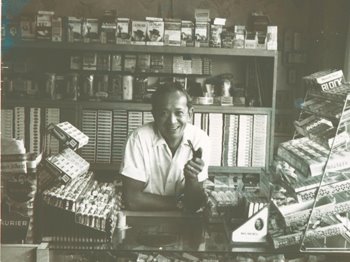
photograph: Dennis Wong, Lotus Café, Prince Albert, Sask. 1960s

"An unaffected and absolutely charming cookbook." -George Fetherling

Looking at China Between The Lines
Chow: From China to Canada: Memories of Food and Family by Janice Wong (Whitecap, $24.95, paper) is an unaffected and absolutely charming cookbook by a visual artist whose family in Prince Albert, Sask., ran that staple institution of every Prairie town, the "Chinese café" — two of them in fact.

-George Fetherling, The New Brunswick Reader, Saint John Telegraph-Journal, November 5, 2005

Chow Events Schedule


CHOW Behind the Scenes: VIEW PHOTOGRAPHS
from various events


Reading | Mission Public Library
Mission, March 3, 2010

Reading | Burnaby Public Library
Burnaby, November 5, 2009

3 Readings | Edmonton LitFest
Edmonton, October 23-25, 2009

Reading + Documentary Screening | Sylvia Hotel Book Club
Sylvia Hotel, Vancouver, August 16, 2007

Reading | World Cultures Month | Fraser Valley Regional Libraries,
Yarrow, March 13, Ladner, March 15, Langley, March 20, 2007

Guest Speaker | Food + Family writing workshop
Chinese Canadian Historical Society writing workshops,
February 21 + 24, 2007

Book launch + Reading | Victoria Lionesses, Victoria BC,
February 10, 2007

Chow + Ricepaper Magazine at Word on The Street
Word on The Street, Vancouver, BC, Sept. 24, 2006

Reading | New Moon Festival of Asian Arts and Culture, Gibsons, BC,
Sept. 23, 2006

Culinary Book Awards Dinner | Cuisine Canada Conference,
Winnipeg MB, Sept. 16, 2006, [Cuisine Canada and the Univerity of Guelph]

Signing | Taste of Guelph, Taste of Winnipeg, Delta Hotel, Winnipeg MB, Sept. 15, 2006 [hosted by The University of Guelph]

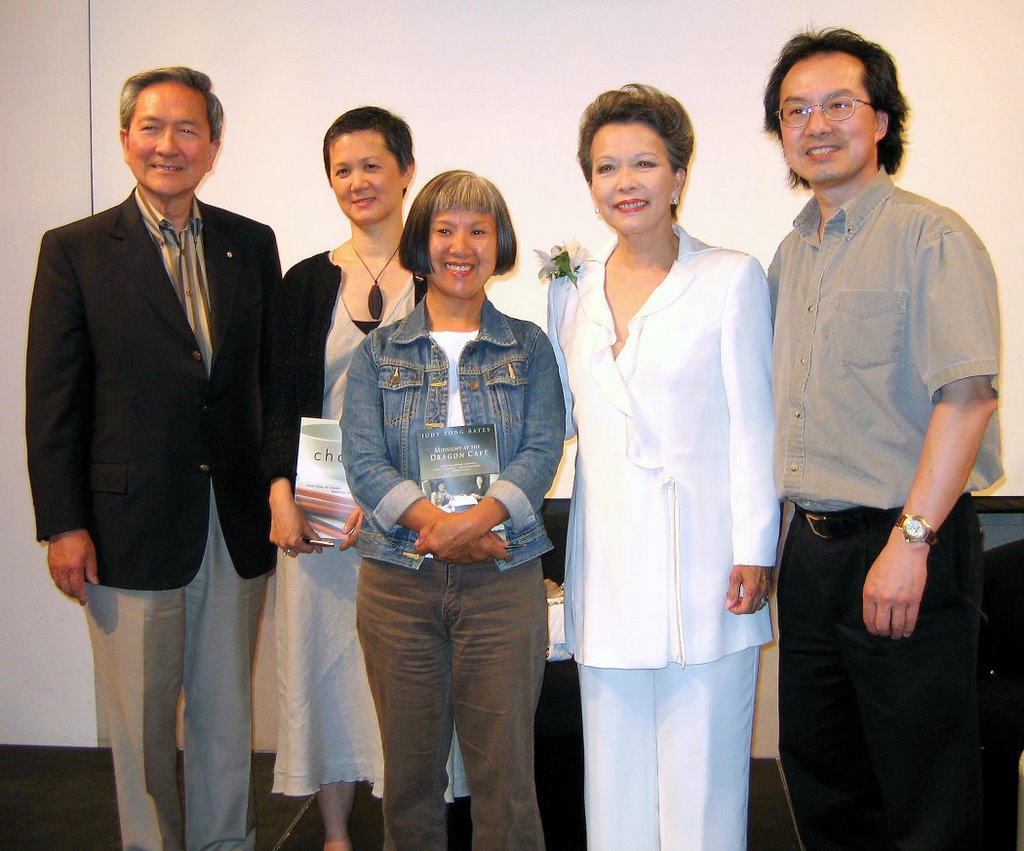
Janice Wong + Judy Fong Bates | Reading - Vancouver Public Library, Vancouver BC, May 16, 2006
[co-presented by the 2006 ExplorAsian Festival]

Reading + filming | J.M. Cuelenaere Public Library, Prince Albert, SK, May 9, 2006

Reading | Chinese New Year Celebrations, Granville Island, Vancouver BC, January 28, 2006 [co-presented by South China Seas]

Chow @ Cookshop | City Square, Vancouver, BC, January 26, 2006

Book launch + Reading | NAAAP Vancouver,
Roundhouse Community Centre, Vancouver BC, January 22, 2006

Reading | Vancouver Public Library, Vancouver BC, January 18, 2006

Book launch + Reading | J.M. Cuelenaere Public Library,
Prince Albert, SK, November 8, 2005

Book launch + Reading | Chinese Canadian History Fair,
Chinese Canadian Historical Society of BC, Malaspina College, Nanaimo, BC, November 5, 2005

Chow @ Barbara Jo's Books to Cooks | Vancouver, BC,
October 26, 2005

Janice Wong + Paul Yee [Chow + Chinatowns] Book launch | Vancouver Museum, Vancouver BC, October 25, 2005
[co-presented by the Chinese Canadian Historical Society]

Book launch + Reading | West Vancouver Memorial Library,
October 18, 2005

Book launch - Whitecap Books | Sylvia Hotel Diningroom,
October 12, 2005

"A wonderful blend of family stories and recipes," says Jasmine Magazine


Chow: From China to Canada: Memories of Food + Family (Whitecap Books, $24.95) by Janice Wong is part scapbook, part cookbook, a wonderful blend of family stories and recipes that Wong's father prepared in his Chinese-Canadian restaurants in Prince Albert, Sask.
Wong provides insight on what it was like to be Canadian-born Chinese in the early 1900s, a perspective that is, sadly, rarely retold. She retraces her family's history in Canada with handwritten notes and personal photos. Chow is a loving homage to her heritage and the recipes are delicious, too!

-Lisa An, Jasmine Magazine, Winter 2006


Great-grandfather Mah's Head Tax Exemption Certificate, 1909

"A charming collection of stories, photographs and sumptuous recipes," says TV Week

Gung Hay Fat Choy!
It's the Chinese Lunar New Year beginning on January 29, and time to celebrate. We're fortunate to have a wonderful Chinese-Canadian community in B.C. offering a tantalizing array of foods and ways to honour the occasion.
We caught up with Janice Wong, artist and author of Chow: From China to Canada: Memories of Food + Family (Whitecap, 2005). The book, originally a gift to her family, is a charming collection of stories, photographs and sumptuous recipes.
Growing up in Prince Albert, Saskatchewan, Wong recalls receiving treats along with the shipments of Chinese groceries from Vancouver to supply her father's restaurants.
"At Chinese New Year we always received extra goodies," she recalls. "Fresh coconuts, thick, juicy pomelos, fresh sticks of sugar cane and little red plastic lanterns filled with coconut candies."
Her dad cooked favourite Chinese dishes for the family at New Year's, including non-traditional roasted duck and Dungeness crab, although in Chow, Wong's mom recalls her grandmother's more traditional New Year's feasts of yesteryear.
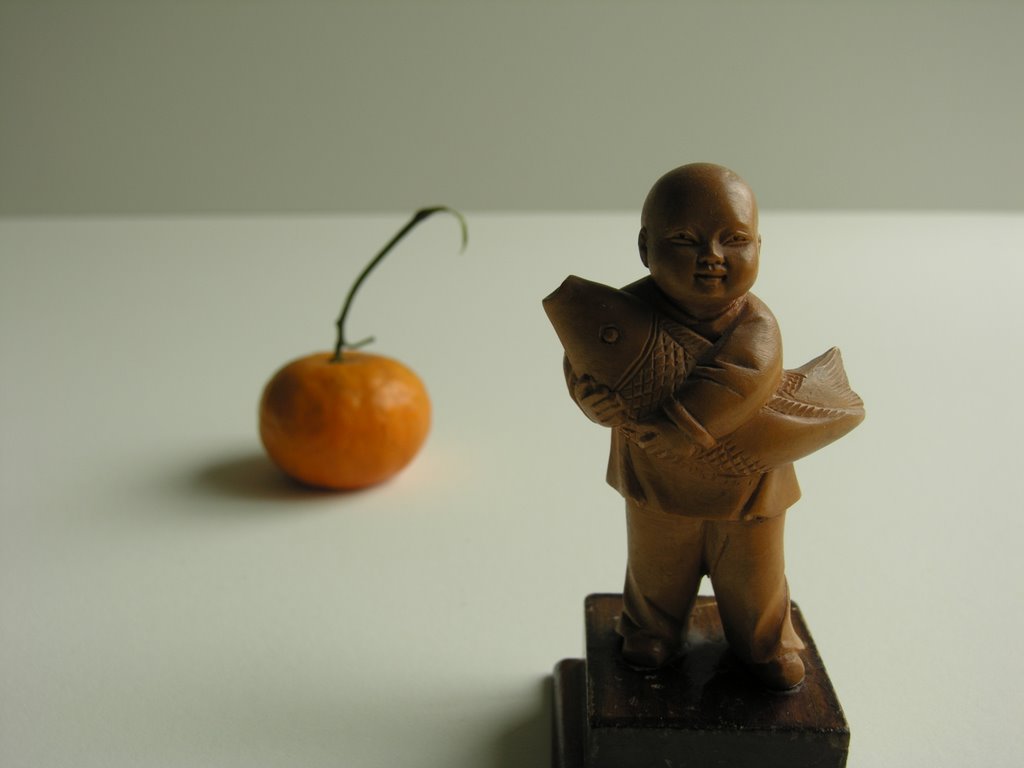
One New Year's tradition Wong still follows is to put oranges in every room of the house for luck. The small oranges, which resemble gold coins, represent wealth and good fortune. Her family also likes to eat noodles to mark the holiday (the longer the better) for "longevity." As for celebrating, Wong suggests a trip to Vancouver's Chinatown, to watch the parade and feast away.
"It's wonderful to be down in the old Chinatown core," she notes. "So many dragon dances, wonderful colours and costumes, drummers, firecrackers."
If the festivities wear you out, she suggests slipping into a local noodle house for some longevity noodles or meeting friends for dim sum or a traditional banquet. You may also wish to treat the little ones in your life by following a popular Chinese custom.
"Pick up some red money envelopes and put a loony or two inside as a gift to the kids in your circle of friends," Wong suggests.
And don't forget to greet everyone with "Gung Hay Fat Choy!" ("Congratulations and be prosperous!")

-Christina Symons, TV Week, January 28, 2006

"Book combines love of family and food with a respect for tradition and history," says Kelowna Capital News

Gung Hey Fat Choy
However you spell it in English, Jan. 29 is the first day of the Chinese New Year, so Happy New Year. On the lunar calendar used by the Chinese, it is the year 4704, and it's the year of the dog. People born in dog years are believed to be loyal, kind and generous. As part of the celebrations, which are a highlight of the year, children are given "lucky money" in little red envelopes, and, naturally, food plays a big part in the celebrations, which go on for 15 days, until the full moon brightens the night sky on February 13.
With food in mind, consider picking up a good book on Chinese cooking. A new book called Chow, published by Whitecap, is one worth considering, simply for a few excellent recipes and the stories.
Written by Janice Wong, this nicely illustrated book combines her love of family and food with a respect for tradition and history.
In stories accompanied by recipes, it tells of two Chinese families' history in Canada from the last century to this, and at the same time, the rise in popularity of the family Chinese café in small towns across the prairies and in Vancouver, Victoria and Nanaimo.
The book's title, "Chow," has a double meaning: both Cantonese for "to stir-fry" and a Western colloquialism for "food" and "eating," she explains. The subtitle From China to Canada: Memories of Food and Family is an apt description. The recipes are predominantly those of her dad, who was the cook at the Lotus café the family opened in Prince Albert, Saskatchewan in the mid-1950s.
She says the recipes are Cantonese, village-style food, and says this was the first wave of Asian food to hit North America, in the early part of the 1900s. "My dad introduced several generations of adventurous Canadian diners to 'standard' Chinese fare, albeit a version modified for a tentative western palate: fried rice, egg fu yong and tomato beef stir-fries," she writes in the book's preface. Inside, there are some excellent recipes for Chinese food, and lots of instruction about how to cook without being chained to a recipe, a concept I heartily approve.
Although it's 190 pages long, don't expect all that many Chinese recipes, as there are also lots of delightfully written tales of family life and history as well.

-Jude Steeves, Kelowna Capital News, January 29, 2006

"A tale of treasured culinary tradition," says Nanaimo Harbour City Star

Janice Wong, author of the much-celebrated Chow: From China to Canada: Memories of Food + Family, will be in Nanaimo Nov. 5 to launch her new book at the Chinese Canadian Historical Society's History Fair, hosted by Malaspina University-College.
This poignant book--both a cookbook and a memoir--was first developed as a gift from Wong to her family.
It is a tale of treasured culinary tradition played out in a wonderful collection of recipes, archival photos and other documents relating to Chinese-Canadian immigration, restaurant culture and family life since Wong's great-grandparents first arrived in the late 1800s.
Much of the book's historical content is related to Nanaimo's legendary Chinatown, where Wong's mother was born.
The reading takes place at 11 a.m., Building 356, Room 109, Malaspina University-College.

-Nanaimo Harbour City Star, November, 2005


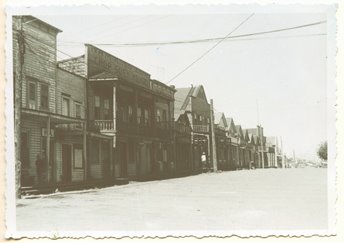
Pine Street, Nanaimo Chinatown

Toronto Womens Bookstore Staff Picks for December

Chow: From China to Canada: Memories of Food + Family by Janice Wong. Whitecap, $24.95
There's lots of wonderful Chinese dishes and Western desserts to cook here and they'll taste even better eaten with the knowledge of the family stories and love behind each one. The author's father, Dennis, ran two Chinese-Canadian cafés in Prince Albert, Saskatchewan, and his story is both unique and a richly-flavoured portion of Chinese-Canadian history.
-Toronto Womens Bookstore, December, 2005

The Richmond Review's Choice for Chinese-Canadian

Chow, from China to Canada: Memories of Food + Family by Janice Wong (Whitecap), tells the heart-rending story of Janice's father who opened two of Canada's first ethnic restaurants in Saskatchewan. Stories of food and family, tried and true family recipes, and a collection of photos, 1940s menus and such make this a bedside read as well.

-Arlene Kroeker, The Richmond Review, November 24, 2005

Calgary Sun Chooses Chow for Christmas

We Love Food! Last-Minute Gifts
Chow: From China to Canada: Memories of Food and Family by Janice Wong (Whitecap Books, $24.95) explores how the author's family and food were entwined for decades. There's favourite family dishes, Chinese recipes from her father's restaurants in Prince Albert, Sask., and endless stories and photos.

-Lorena D. Johnson, Calgary Sun, December 14, 2005

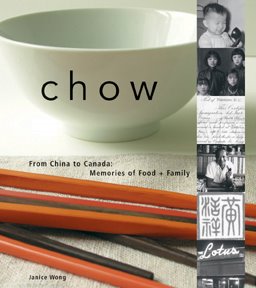
The original cover, from the version of the book completed for family members in 2003.


Below, the Chow cover as it appears today.
Whitecap Books, 2005


TO PURCHASE A COPY OF CHOW please visit your LOCAL BOOKSELLER.
To order online, click the link to AMAZON.CA or AMAZON.COM


LINK to contact Janice Wong.

------------------------------------------------------------------------------------
photographs copyright 2005 Janice Wong and Whitecap Books